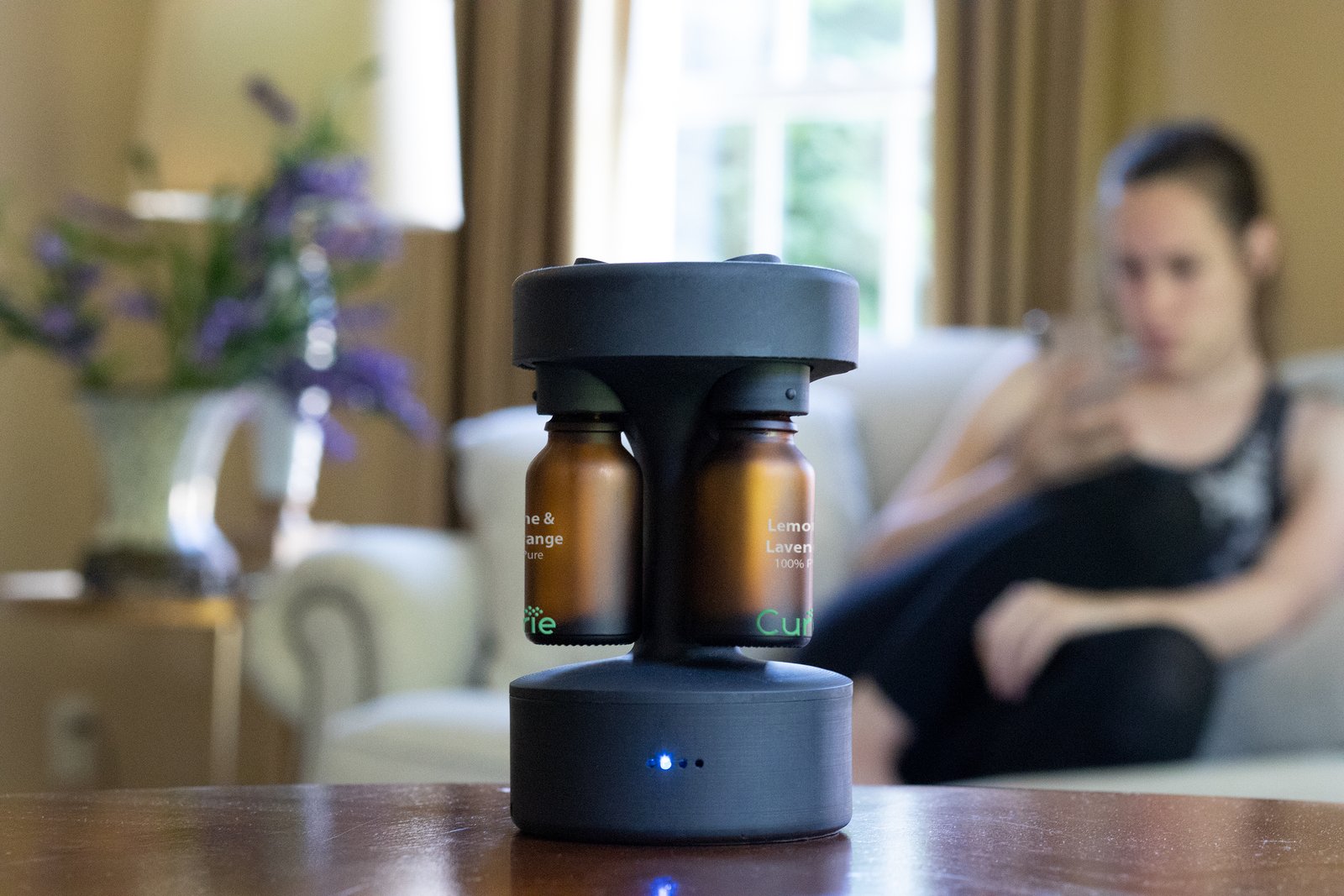
Curie.
A three-bottle piezoelectric essential-oil diffuser. From a 3D-printed concept to twenty-three paying customers.
Curie is a consumer diffuser I took from rough 3D-printed concept to shipped product — industrial design, custom PCB, Arduino firmware, native iOS app, retail packaging. The mechanical design was mine, self-taught in Shapr3D with no formal background. Hardware and firmware specs were mine too, executed by two contract engineers I managed directly, without a PM layer between us.
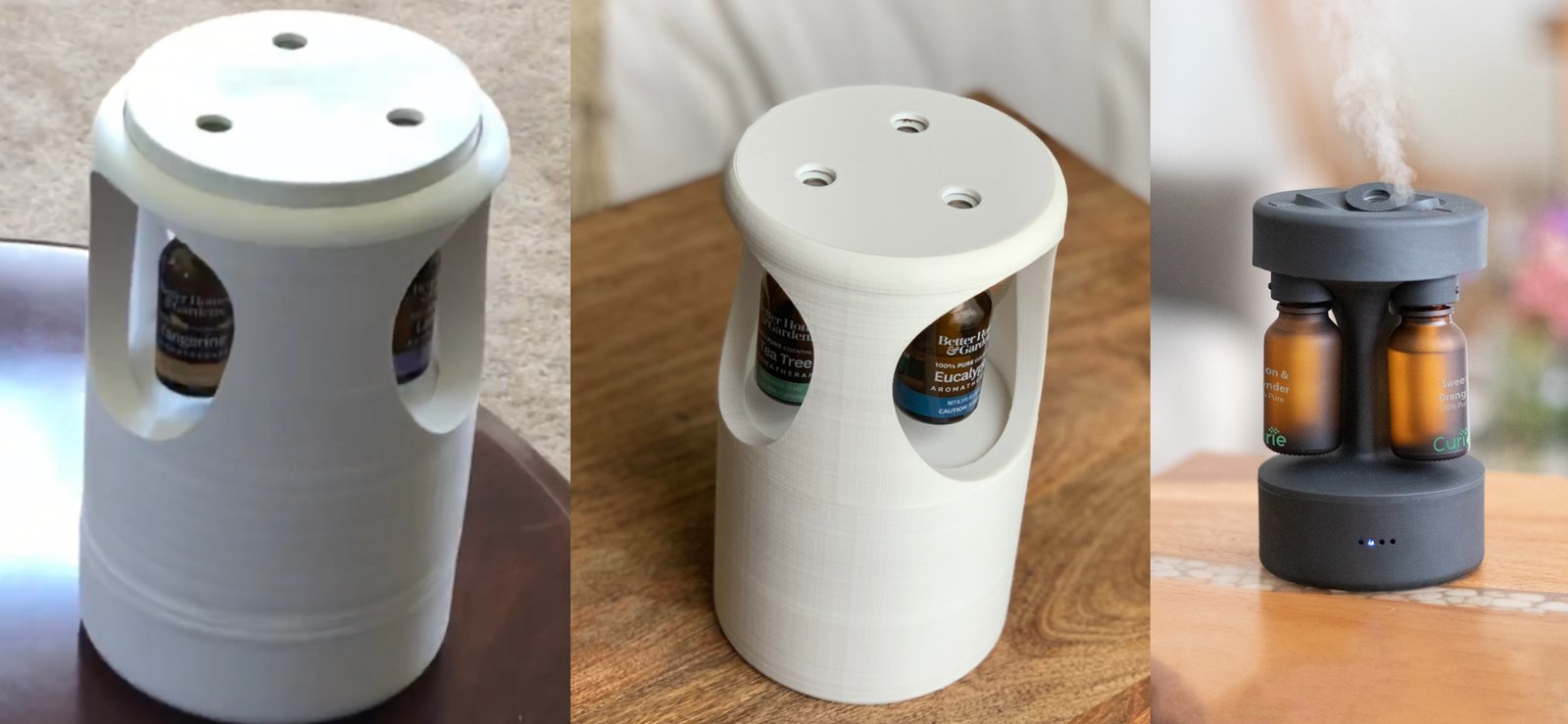
Three generations.
The first print, on the left, was a rough PLA shell with a piezoelectric transducer bolted in — just enough to prove the mist concept worked in the form factor I wanted. The second refined the geometry, the airflow path, and the internal layout for serviceability.
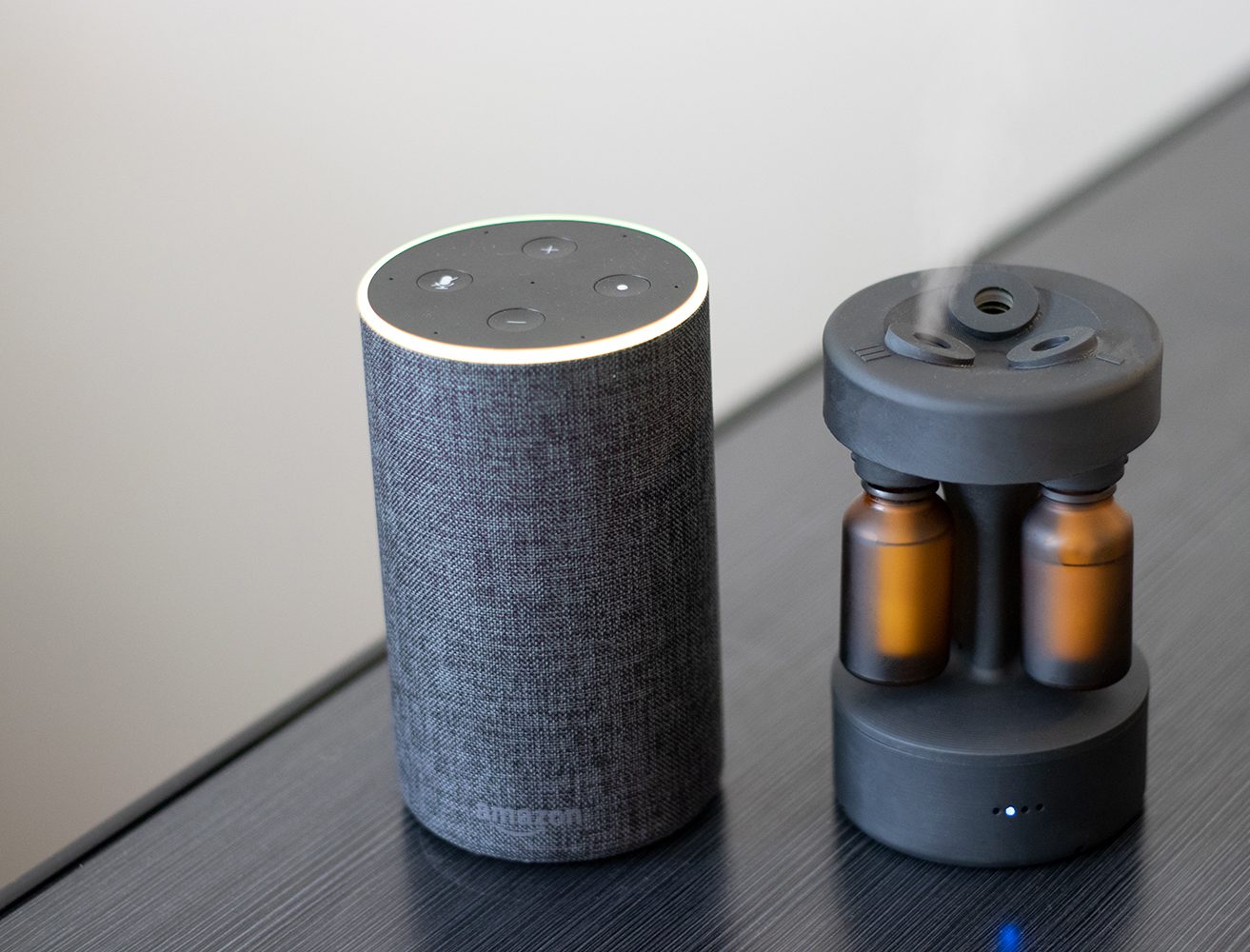
The third, in matte black, is the production unit: SLA-printed housing, amber-glass quick-connect bottles, custom PCB. The plume above it is the device running.
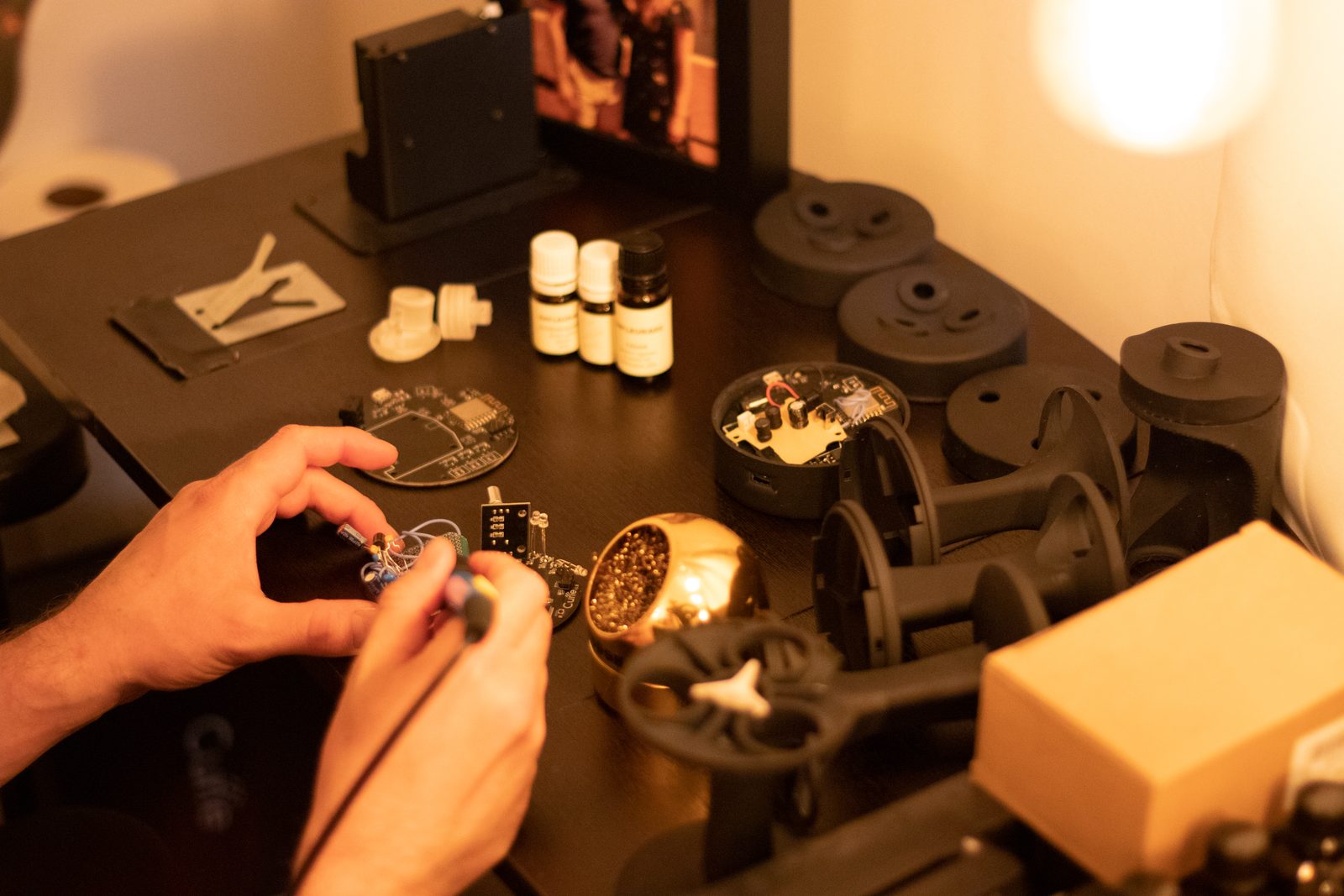
Hardware, firmware, app.
The PCB was laid out in Eagle by a contracted electrical engineer, against requirements I specified — rotary-encoder input, four-LED status feedback, piezoelectric driver circuit, WiFi for app control. The silkscreen on that round board reads "Curie."
Firmware was written in Arduino by a contracted programmer against a pin-map and behavior spec I drafted: timer-driven piezo pulses at four intensity levels, click-based UI, status feedback. The mechanical design — housing, bottle retention, mist path, base — was entirely mine in Shapr3D.
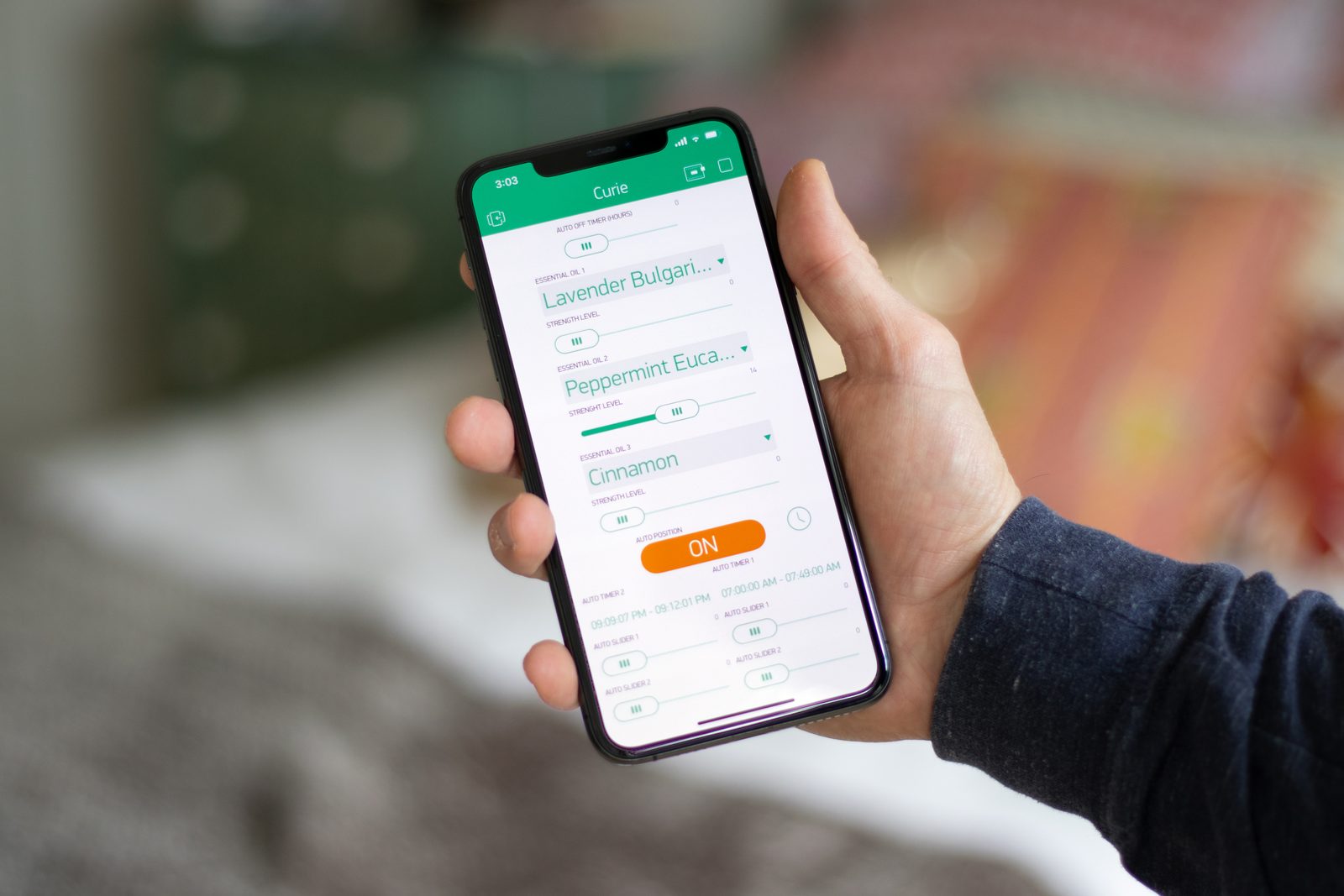
Three oils, independently scheduled.
The iOS app gives each bottle slot its own strength slider and auto-timer schedule; multiple oils can run at once at independent intensities. Hardware, firmware, and app were built in parallel and integrated iteratively — a change to the firmware behavior spec usually meant a matching change in the app the same week.
Twenty-three units to paying customers.
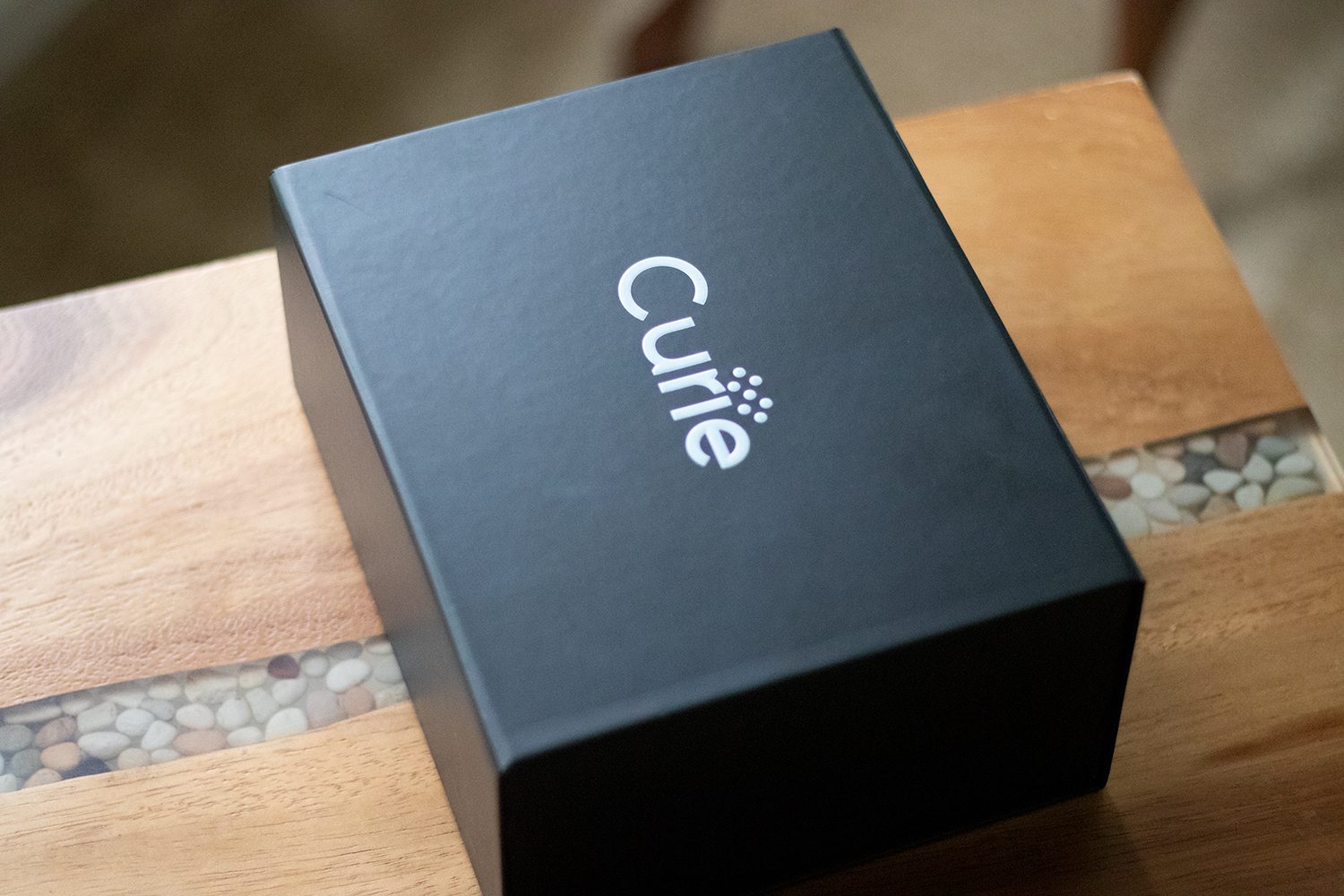
Curie went out in retail-grade packaging to twenty-three paying customers. It lived on the same shelves as their existing smart-home gear — shown here next to an Echo for scale. I handled manufacturing coordination, assembly, packaging, and fulfillment.
It wasn't scaled past that first run. But it crossed the gap that mattered: from an idea in a notebook to a product people paid for, built, shipped, and used.
Curie is the clearest proof I have of the shape of work I do now: a hard technical problem, a clear spec, outside contractors coordinated directly, a product delivered. The technology changed — it's LLMs and agents today. The job didn't.